In a European hotel landscape that is increasingly observed, evaluated and compared, distinctions, awards, guides and professional recognitions play an essential role in highlighting hotels, destinations and the many professions of hospitality.
European hospitality has never been so visible, commented upon, evaluated and distinguished. Between historic guides, review platforms, international rankings, design prizes, professional awards, heritage labels and sector-specific recognitions, hotels now operate in an environment where reputation no longer depends solely on the actual quality of a stay, but also on the way that quality is identified, expressed and recognised.
This evolution is far from insignificant. When conducted seriously, a hotel award can help reinforce the image of a property, highlight a team, support the reputation of a destination or draw attention to a place that may still be insufficiently known. It can also remind us that hospitality is not merely an accommodation industry, but a world of service, culture, design, gastronomy, management and transmission.
Yet behind the word “award” lie very different realities. Some prizes are based on votes by travellers or professionals. Others rely on inspection, a jury, an application process, a selection method, a ranking, a heritage recognition or a distinction awarded by peers. There is therefore no single way to recognise hotel excellence. There are several readings, several methods and several sensitivities.
A European landscape rich in distinctions
To speak about hotel awards in Europe is first to recognise the richness and legitimacy of this landscape. When carried out seriously, hotel distinctions all contribute, in their own way, to the influence of European hospitality. They support the visibility of properties, the recognition of teams, the promotion of destinations and the tourism development of territories.
The World Travel Awards, for example, have long held an important position in the world of tourism and travel. Their international programme distinguishes many players in the sector, including hotels, resorts, destinations, airlines and tourism companies. Their model is notably based on strong international visibility and a voting process open to industry professionals and travellers.
The World Luxury Hotel Awards follow another dynamic, focused on luxury hospitality and international recognition through the vote of guests, travellers and industry players. This approach highlights market perception, the experience actually lived by guests and the ability of a property to be recognised by its clientele and its professional environment.
With the MICHELIN Guide Hotels and the MICHELIN Keys, hospitality has also entered a new phase of recognition through selection and inspection. The MICHELIN Keys notably place emphasis on design, architecture, service, the personality of the property and the overall quality of the experience. This marks an important evolution: the hotel is no longer considered simply as a place to sleep, but as a complete experience in itself.
Other initiatives, such as the AHEAD Awards, focus more particularly on the hotel experience, design, architecture and contemporary creation. They remind us that a hotel is also a cultural, aesthetic and spatial object, shaped by architects, decorators, designers, investors, operators and teams capable of creating memorable places.
The Historic Hotels of Europe Awards highlight historic hotels, character properties, castles, old houses and establishments rooted in European memory. Their contribution is valuable, because it underlines the importance of heritage, transmission, authenticity and the link between hospitality and culture.
The International Hotel Awards are based on an international competition model organised by regions and categories, covering both operating hotels and aspects linked to hotel design. This diversity of programmes shows that European hospitality can be viewed from several angles: destination, luxury, guest experience, heritage, design, gastronomy, leadership or the overall quality of a stay.
Global lists, readers’ choices and review platforms
It is also important to distinguish hotel awards from major international lists, media rankings, readers’ choices and distinctions generated by traveller platforms. Initiatives such as The World’s 50 Best Hotels, the Condé Nast Traveler Readers’ Choice Awards, the Tripadvisor Travelers’ Choice Best of the Best Hotels or the Booking.com Traveller Review Awards contribute to the global visibility of hotels, but they belong to a different logic: worldwide ranking, readers’ vote, review aggregation, digital reputation, editorial selection or broad media exposure.
These systems can be useful for measuring market perception, amplifying the reputation of a property or offering travellers a point of reference. But they do not necessarily serve the same purpose as a recognition specifically designed for European hospitality, its professions, its houses, its service traditions, its schools, its destinations and its professional culture. A global list places hotels from very different continents, markets and models in competition with one another. A European distinction, when built seriously, can instead look more closely at what Europe brings to the history and future of hospitality.
There are also awards, guides or distinctions that are more regional, national or focused on a specific area of the continent. Their contribution may be real, especially when they promote a market, a destination or a local hotel culture. But their scope is not comparable to that of a recognition designed for Europe as a whole. An award attached to a country, a region or a particular hotel basin cannot have exactly the same reach as a programme whose core focus is European hospitality in all its diversity.
This distinction matters because Europe remains one of the great founding grounds of contemporary hospitality. Its hotel schools, particularly in Switzerland, France, Belgium, Germany and Spain, have trained a significant proportion of the executives, general managers, chefs, service leaders and professionals who have then spread their expertise throughout the world. As with gastronomy, Europe is not merely a geographical territory: it remains a place of transmission, standards, service culture and inspiration for a large part of international hospitality.
It is from this perspective that the European Hotel Awards are part of the landscape of European hotel distinctions. Their approach highlights European hospitality in its diversity, valuing properties, professions, destinations and personalities that contribute to the influence of hospitality across the continent.
These examples should not be read as competing models to be opposed to one another. On the contrary, they show the diversity of ways in which hospitality can be valued. A vote can reflect the attachment of a clientele or the strength of a community. An inspection can underline the coherence of an experience. A design prize can reveal the creativity of a project. A heritage distinction can recall the value of a place charged with history. A professional recognition can honour a career, a function or a human contribution to the industry.
Awards specifically dedicated to European hospitality
Within this landscape, one important distinction must be underlined: many recognised hotel awards operate on a global or international scale. This openness is valuable, because it allows destinations, brands, concepts and properties to be compared across several continents. But it does not always provide a specifically European reading of hospitality.
Europe has a distinctive hotel identity. It brings together historic palaces, urban hotels, family houses, resorts, heritage properties, hotel restaurants, cultural destinations, tourism capitals, regions of character and a great diversity of service traditions. This richness cannot be reduced to a logic of international luxury. It also rests on history, transmission, gastronomy, architecture, local culture, attention to detail and the depth of the professions.
It is precisely within this space that the European Hotel Awards find their singularity. Their vocation is to highlight European hospitality as a living whole, rooted in countries, destinations, houses, teams and professional journeys across the continent. This European dimension provides a framework for valuing the diversity of properties and professions that contribute to the influence of European hospitality.
This European dimension is not a form of closure. On the contrary, it is a framework of recognition. It makes it possible to highlight hotels in Europe, hotel restaurants, spas, general managers, service leaders, chefs, housekeepers, destinations and professionals who contribute to the richness of European hospitality in an increasingly competitive global market.
“The diversity of hotel distinctions does not weaken the sector; on the contrary, it reveals its richness, its professions, its sensitivities and its many forms of excellence.”
Références Hôteliers Restaurateurs International
Beyond rankings: understanding what each distinction recognises
Hospitality is not a uniform discipline. An urban palace, a boutique hotel, a family resort, a historic hotel, a country house, a hotel restaurant, a spa resort or a design hotel cannot always be compared according to the same scale. The number of rooms, the average rate, the decoration, the reputation or the location are not enough to summarise the quality of a property.
Some hotels impress through their architecture. Others through the accuracy of their welcome. Some through their history, their gastronomy, their territorial roots, their relationship with nature, their general management, their atmosphere or the invisible quality of their daily service. Hotel excellence is rarely one single element. It often arises from a balance between the place, the professions, the teams, the management, the style, the cuisine, the maintenance, attention to detail and the promise delivered to the guest.
Rankings have their usefulness. They provide reference points, create visibility and sometimes make it possible to compare properties according to identified criteria. But hospitality retains a more subtle dimension, one that is more difficult to rank. What makes the deep quality of a hotel is not always immediately measurable. It can be felt in the coherence of a place, in the fluidity of service, in the stability of a team, in the way a guest is welcomed, recognised and accompanied.
This dimension explains why hotel awards should not be considered only as promotional tools. They can also become instruments for reading the market. They say something about the values the industry chooses to highlight: luxury, heritage, innovation, design, leadership, sustainability, gastronomy, training, guest relations or the human quality of service.
Open recognitions, professional circles and event-based awards
It is also important to distinguish awards open to the whole market from recognitions issued by more corporatist professional circles. Certain professional associations, bringing together for example general managers, concierges, housekeepers, chefs or other hospitality functions, may legitimately distinguish their members or their peers. These recognitions have their usefulness, because they highlight professional journeys, sometimes demanding functions and communities of practice. But they often belong to an internal logic of recognition, where the criteria, codes and balances are defined by the circle itself.
This corporatist dimension does not remove all value from these distinctions, but it naturally limits their reach. A reward attributed among members of the same professional environment cannot always be read with the same distance as a distinction open to the whole of hospitality, observed from the outside, with attention given to the property, the guest experience, the real quality of service, the coherence of the house and its influence within a broader market. In hospitality, the external eye remains essential: it allows one to move beyond inward-looking recognition, peer logic and the natural self-celebration that any corporation can, sometimes despite itself, produce.
There are also awards created within the framework of trade shows, forums or professional events. These distinctions often respond to a different logic: animating a programme, attracting participants, highlighting a network of exhibitors, giving visibility to partners or creating communication content around a sector-based event. They can help energise an event, but they should be understood within their context: that of a visibility tool linked to a professional gathering.
The reach of these awards is therefore not necessarily comparable to that of an editorial, qualitative or institutional recognition built over time. When a prize is mainly attached to a trade show or a commercial ecosystem, it also serves the communication of that event. This does not make it illegitimate, but it invites a clear distinction between logics: an award designed for professional animation, networking or event visibility does not always carry the same meaning as a distinction conceived to analyse, over time, the quality of a hotel, the strength of a team, the consistency of service and the reality experienced by the guest.
This is why method, scope and the perspective brought to the hotel are decisive. A hotel distinction gains its full value when it moves beyond inward-looking circles, simple communication tools or circumstantial recognition, and asks what truly makes the quality of a house: its welcome, its service, its coherence, its human culture, its management, its identity and the experience the guest carries away.
The guest experience: a human reality before it is a setting
In hospitality, the guest experience is never born solely from the beauty of the walls. The décor, architecture, noble materials, furniture, volumes or light create a context. They can amaze, seduce and establish an atmosphere. But they are not enough, on their own, to create the emotion of a stay.
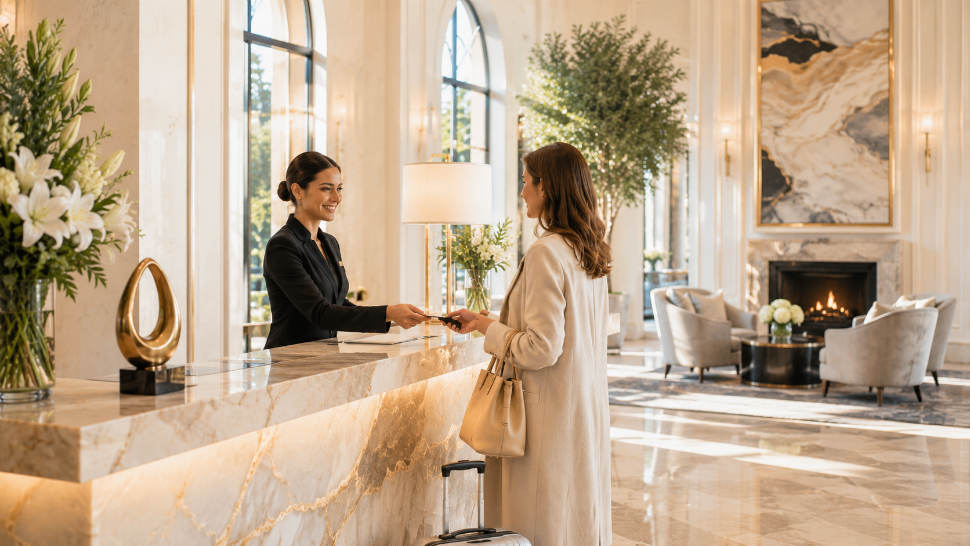
The guest experience depends first on women and men. It depends on a management able to set the tone, on fair leadership, motivated teams, an attentive housekeeper, an efficient concierge, a coherent chef, a precise F&B manager, a warm reception, well-conducted dining service, discreet maintenance and a shared culture of welcome.
A hotel may have a magnificent setting and still produce a cold experience if the team is not engaged. Conversely, a more discreet property can leave a lasting memory through the accuracy of its welcome, the way the house is maintained, the elegance of its service and the sincerity of its relationship with the guest. Hotel luxury, when truly mastered, is therefore not only a matter of façade. It rests on human culture, organisation, a house spirit and constant attention to detail.
This human reality now runs through many hotel distinctions. The recognition of general managers, chefs, housekeepers, concierges, service leaders, designers or hospitality personalities is not new. It existed before and continues to evolve within several programmes. This movement is positive, because it reminds us that a hotel is a collective work, carried by professions that are often visible only when they are missing.
The consistency of service, one of hospitality’s most demanding challenges
There is, however, one dimension that is often less visible in the analysis of hotel excellence: the durability of service quality. Being remarkable on one day is not enough. The real difficulty lies in maintaining, day after day, a quality of welcome, service and attention that remains faithful to the spirit of the house.
Hospitality is a profession of a thousand details. Every gesture, every look, every word, every delay, every prepared room, every laid table, every smile, every answer given to a guest contributes to the overall perception of the stay. This daily precision is all the more complex because it rests on deeply human material. On one side, teams, with their energy, fatigue, motivation, training and sense of service. On the other, guests, with their expectations, perceptions, emotions, moods and their own way of experiencing the stay.
Hotel quality can therefore never be considered acquired. It must be maintained, transmitted, controlled, inspired and renewed with humility. This is where the strength of a true service culture is measured: not only in the brilliance of an exceptional moment, but in the ability of a house to maintain serene, stable and human standards over time.
This consistency requires managerial wisdom, humility, motivation and constant attention to both teams and guests. In hospitality, the prestige of a place, the reputation of a name or the quality of a setting only truly make sense when they are translated, over time, into a welcoming, accurate, fluid and memorable experience.
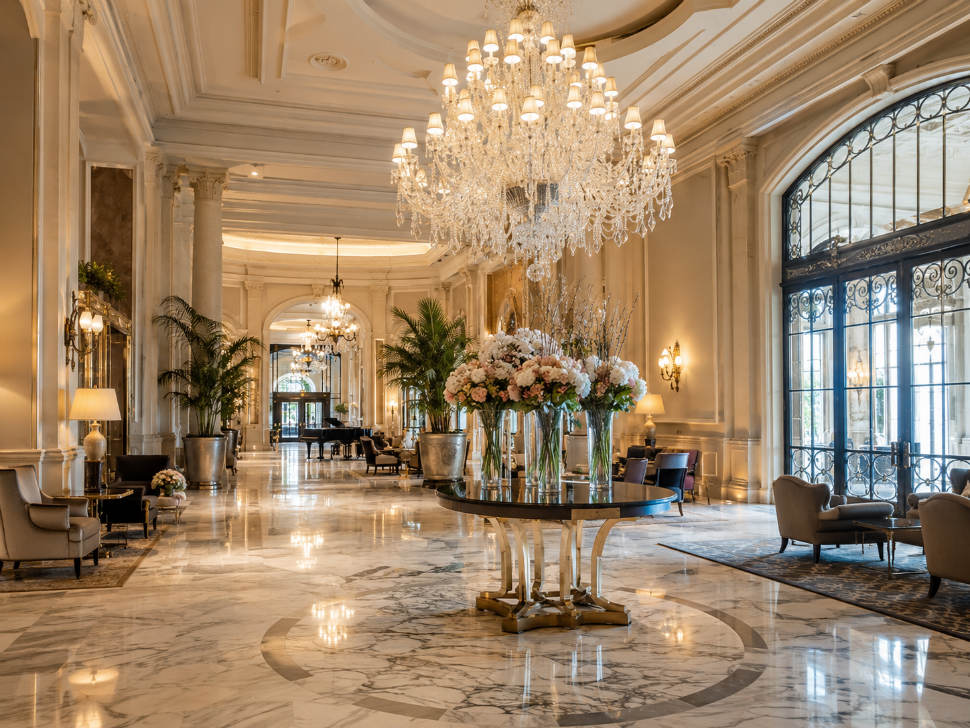
The European Hotel Awards within the landscape of hotel distinctions
Within this panorama of awards, guides, prizes and professional recognitions, the European Hotel Awards occupy a singular place, with particular attention given to European hospitality, its properties, its professions and the quality of the experience offered to guests.
Their vocation is to highlight hotels, hotel restaurants, spas, destinations and professionals who contribute, each in their own way, to the influence of European hospitality. This recognition is part of an approach attentive to the diversity of houses, the richness of professional journeys, the culture of service and the human value of hospitality professions.
A hotel can never be reduced to its image, its décor or its reputation. It also exists through its history, its atmosphere, its team, its management, its gastronomy, its relationship with its territory and the quality of the memory it leaves with its guests.
The European Hotel Awards are attached to this broader dimension of hospitality. They remind us that hotel excellence is not limited to a single criterion, but is built through the coherence of a place, the consistency of service, the elegance of the welcome and the daily commitment of the women and men who bring hospitality to life.
“The value of a hotel is not limited to its image. It is revealed in the quality of the welcome, the coherence of the place and the lasting memory left with the guest.”
Références Hôteliers Restaurateurs International
A European recognition of hospitality
Europe remains one of the great historic territories of hospitality. Its hotels, restaurants, destinations, schools and service traditions have largely contributed to shaping a certain idea of welcome, refinement, gastronomy and guest relations.
From this perspective, the European Hotel Awards value a plural European hospitality: major historic houses, urban hotels, resorts, independent properties, hotel restaurants, spas, destinations of character and professionals committed to the quality of service.
This diversity is one of the strengths of European hospitality. It shows that there is not one single form of excellence, but several possible expressions of the hotel profession: heritage, design, gastronomy, service, management, transmission, innovation, the art of welcome and attention given to the guest.
Visibility for houses and professions
Hotel distinctions also have a role in giving visibility to properties and teams. When conducted seriously, they help value the work accomplished, strengthen the reputation of a house, support the image of a destination and recall the essential contribution of hospitality professions.
In this spirit, the European Hotel Awards contribute to highlighting hotels, hotel restaurants, spas and professional personalities whose work or activity contributes to the image of European hospitality.
This recognition does not replace the experience lived by the guest, nor the reputation built over time. It rather places a property or a professional within a broader reading of the European hotel sector.
In brief: a European reading of hotel excellence
Hotel awards in Europe do not follow a single method. Votes, inspections, rankings, professional selections, design prizes, heritage recognitions and institutional distinctions all contribute, when conducted seriously, to enhancing European hospitality.
Within this landscape, the European Hotel Awards bring a European reading of hospitality, attentive to properties, professions, service culture and the overall quality of the guest experience.
Beyond rankings, votes or labels, one certainty remains: hotel excellence can never be reduced to a single criterion. It is built through consistency of service, the quality of teams, the accuracy of welcome and that invisible dimension which transforms a stay into a lasting memory.
European Hotel Awards
European Hotel Awards
European hospitality recognition dedicated to hotels, hotel restaurants, spas and hospitality professionals
Internet: www.european-hotel-awards.com
Tags: best hotel awards Europe, European hospitality, European Hotel Awards, European hotels, guest experience, Hospitality Awards, hospitality excellence, hospitality leadership, hotel awards, hotel awards and rankings, hotel awards Europe, hotel awards guide, hotel awards in Europe, hotel distinctions, hotel guest experience, hotel industry, hotel leadership, hotel management, hotel rankings, hotel recognition, hotel recognition Europe, hotel service, luxury hospitality, luxury hospitality Europe, luxury hotel awards