 © Hoshino Resorts
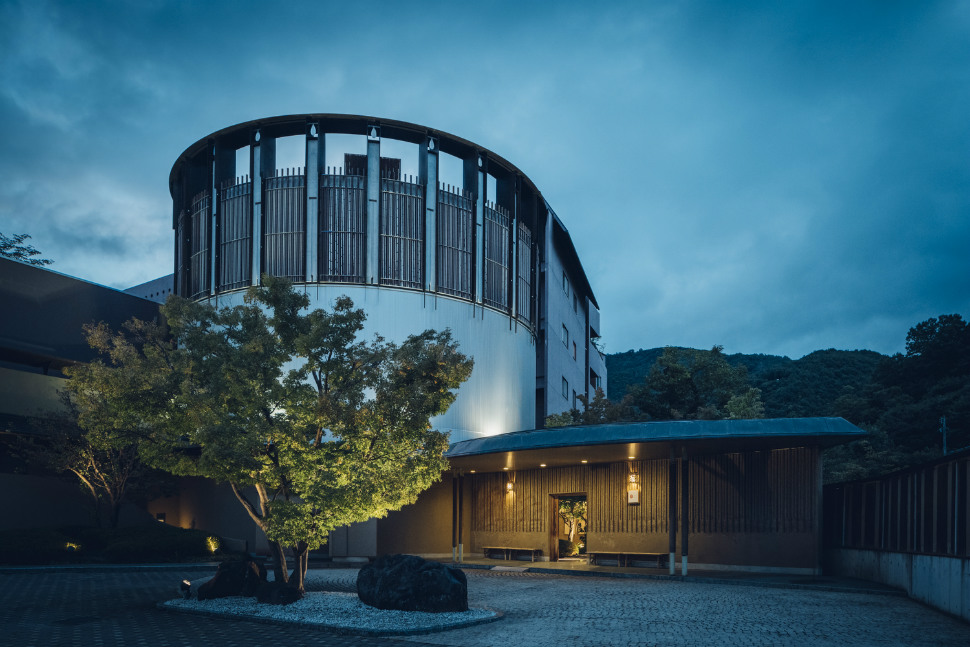
At KAI Matsumoto, the idea of the ryokan is being stretched without being abandoned. Reopened on 4 August 2026 after a complete renovation, the Hoshino Resorts property in Asama Onsen now uses music, regional wine, Italian cooking and thermal bathing to turn Matsumoto itself into the organising principle of the stay.
The most interesting hotel renovations are not always the ones that look the most different. They are the ones that change the way a guest moves through a place. KAI Matsumoto does exactly that. Rather than treating accommodation, dining, bathing and evening entertainment as separate hotel functions, it lets them overlap.
The result is a more fluid interpretation of the contemporary ryokan. A record can be playing in the room before dinner. A local wine can continue the conversation afterwards. Music can fill the lobby while the thermal ritual remains the quiet anchor of the day.
What holds those elements together is not a decorative theme, but Matsumoto and the wider Nagano region.
 © Hoshino Resorts
Music changes the atmosphere of the ryokan
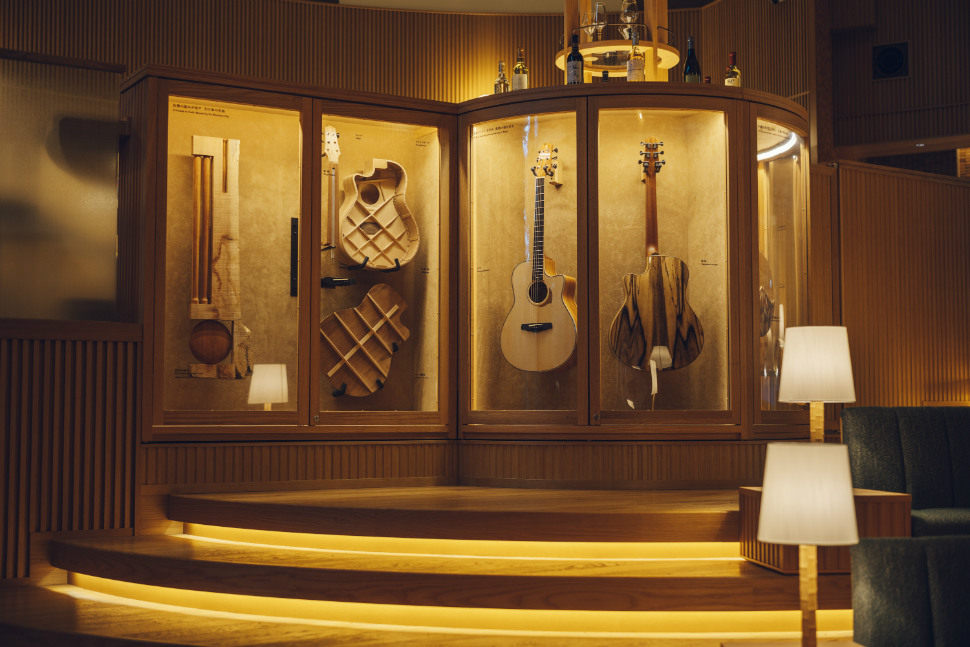
Matsumoto has long been associated with music, performance and instrument making. KAI Matsumoto turns that cultural identity into something guests can experience rather than simply read about.
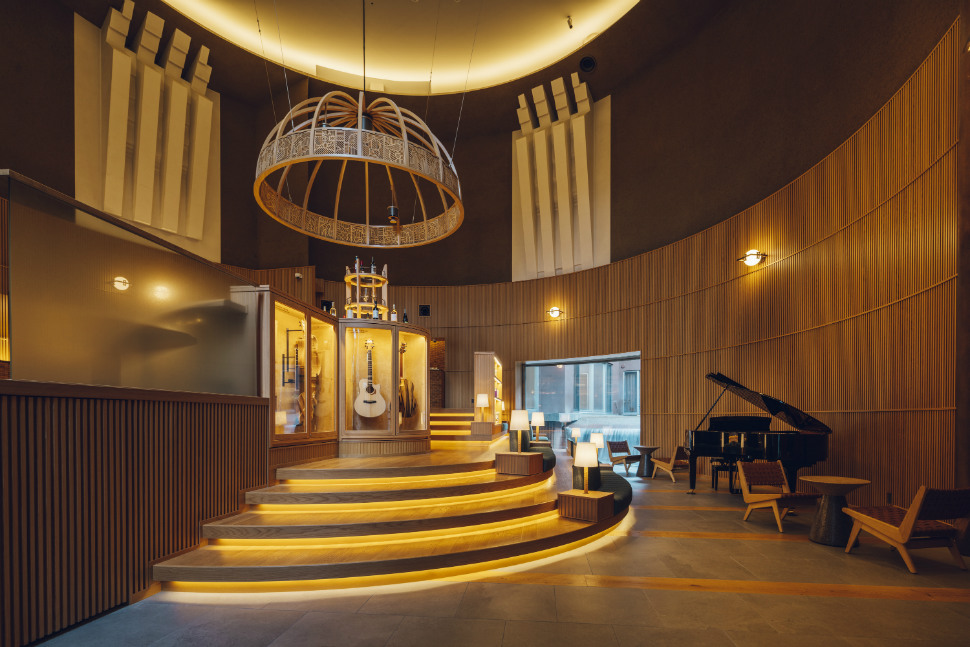
The lobby rises through an atrium of around ten metres, giving live performances a natural acoustic setting. Piano, guitars and references to local craftsmanship are present, but the room avoids feeling staged. It functions first as a place to sit, listen and spend time.
That difference matters. The music is not scheduled as a separate attraction that guests must go and watch. It slips into the evening almost organically, becoming part of the transition between dinner, wine and rest.
In that sense, the property behaves less like a themed hotel and more like a ryokan that has learned to listen to its city.
 © Hoshino Resorts
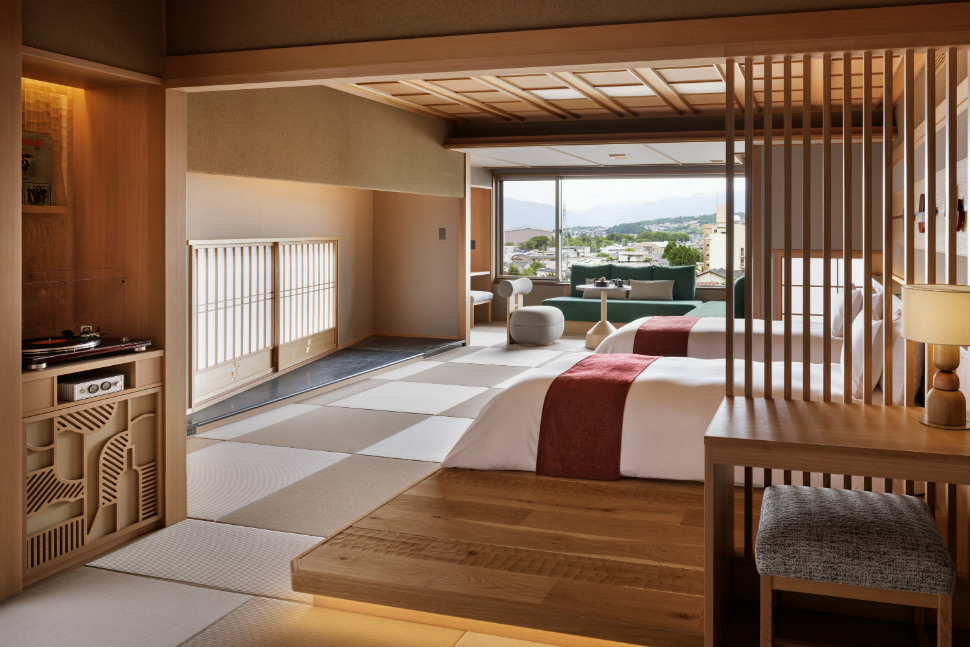
GAKU no Ma brings sound into the private space
The same idea continues in the guest rooms through the GAKU no Ma concept. Vinyl players and high-fidelity speakers allow guests to create their own listening environment, extending the musical identity of Matsumoto beyond the public spaces.
Craftsmanship plays an equally important role. Decorative details refer to Matsumoto Keisei-nuri, a lacquer technique associated with guitar production in the region. The connection is subtle: it does not turn the bedroom into a display case, but it gives the interior a local logic.
The 130-square-metre GAKU Suite develops that idea on a larger scale, combining a piano, private open-air onsen, sauna and terrace in a single environment.
Instead of separating culture and wellness, the suite allows them to coexist in the same rhythm.
 © Hoshino Resorts
Italian cooking becomes a new way to read Shinshu
The most radical change takes place at dinner. KAI Matsumoto has moved away from the traditional kaiseki format and introduced a refined Italian approach, an unusual decision for a brand so strongly connected with the Japanese ryokan.
The change works because the culinary identity still begins with Nagano. Ingredients from Shinshu remain central, while Italian techniques provide a different framework for texture, flavour and pairing.
This makes the dining experience less about importing Italy and more about giving local produce another language. The restaurant’s semi-private spaces preserve the intimacy associated with ryokan dining, while the menu creates a more open dialogue with wine.
The source remains Japanese; the method becomes deliberately international.
Wine gives the evening a second life
Nagano’s cool-climate vineyards are now much more visible within the KAI Matsumoto experience. The property offers more than 50 wines from the region, with particular attention to Kikyogahara, one of Nagano’s best-known wine-growing areas.
The new wine bar sits in the lobby, facing the space used for live music. That placement is more than a design decision. It changes the social life of the hotel after dinner.
Guests can move from the table to a glass of local wine without feeling that one part of the evening has ended and another has begun. Music and wine occupy the same space, creating a slower, more continuous rhythm.
The wine list therefore becomes part of the destination experience rather than a supporting detail of the restaurant.
 © Hoshino Resorts
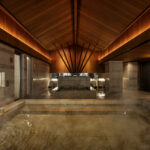
The onsen remains the emotional centre
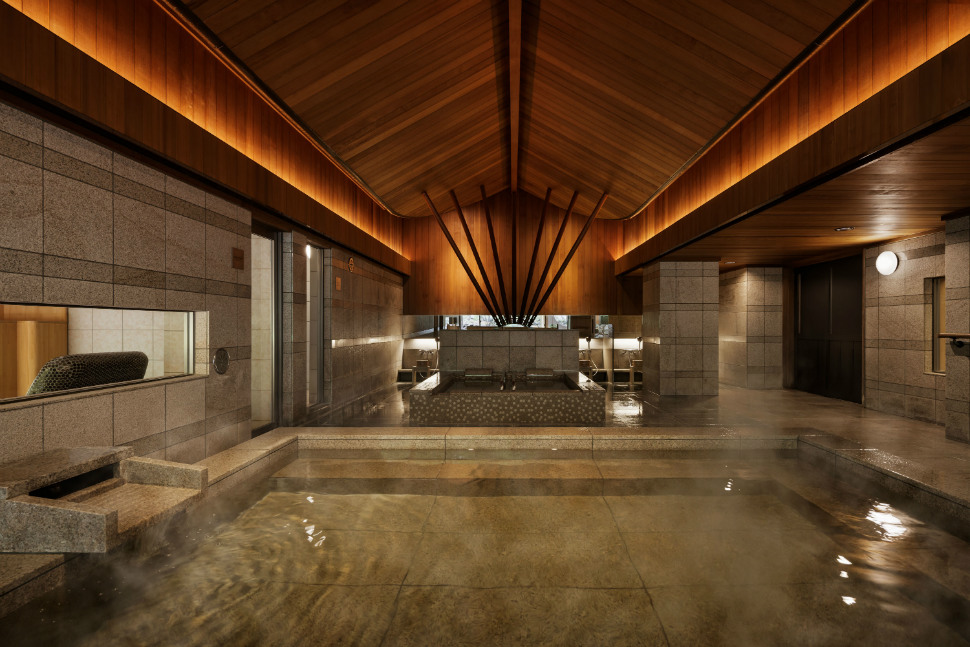
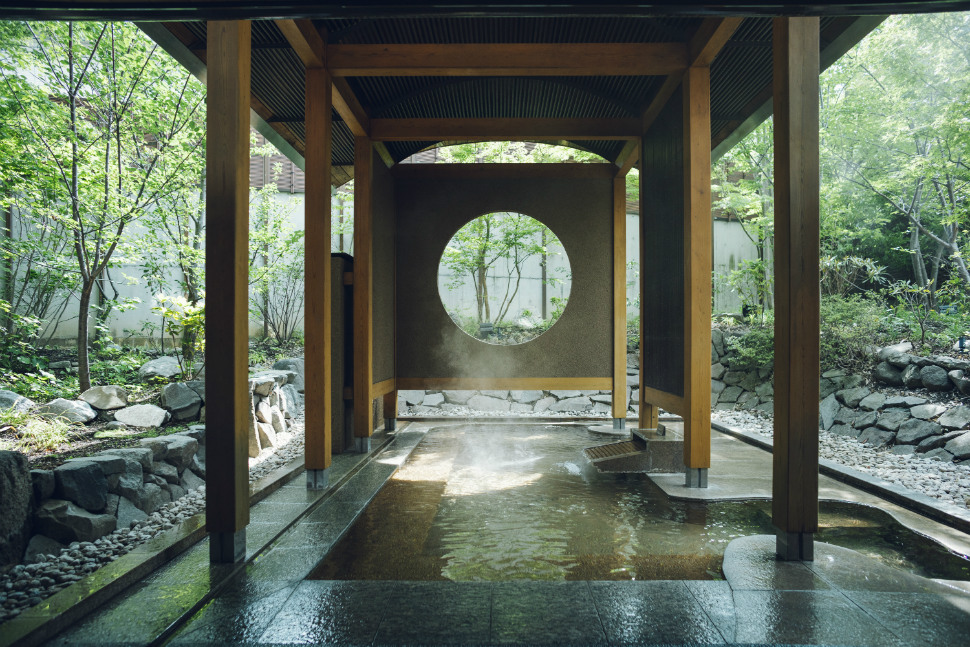
For all the new ideas, KAI Matsumoto remains rooted in the thermal culture of Asama Onsen. The renovation does not push bathing into the background. It gives the onsen a clearer role as the point around which the rest of the stay can unfold.
The property offers eight types of baths and thirteen bathing variations, including indoor and outdoor experiences, reclining bathing, radiant warmth and treatments using hinoki cypress.
Rather than presenting the baths as a list of facilities, the experience is built around changes in temperature, posture, atmosphere and recovery. A dedicated post-bath lounge extends the ritual, including a drink made with Shinshu apple vinegar.
The onsen is not a spa added to the ryokan. It is the structure that gives the stay its sense of pause.
 © Hoshino Resorts
A contemporary ryokan shaped by connections
KAI Matsumoto is most convincing when its individual elements are considered together.
Music is linked to Matsumoto. Wine and ingredients come from Nagano. Decorative craftsmanship refers to local instrument making. The thermal experience belongs to Asama Onsen. Even the decision to introduce Italian cuisine gains meaning because it creates another way to express those regional products.
Seen in isolation, a vinyl player, a wine bar or an Italian dinner could feel like lifestyle additions. Seen as part of a single hospitality narrative, they become much more coherent.
Hoshino Resorts was founded in Karuizawa in 1914 and has long built its KAI brand around hot-spring culture and local identity. At Matsumoto, that philosophy is being pushed in a more experimental direction.
The ryokan has not lost its roots. It has simply found a different tempo.
KAI Matsumoto | Onsen ryokan in Asama Onsen, Nagano
KAI Matsumoto
1-31-1 Asama Onsen, Matsumoto, Nagano 390-0303, Japan
Tel. +81 50 3134 8096
Internet: hoshinoresorts.com/en/hotels/kaimatsumoto/
Tags: Asama Onsen, gastronomy, Hoshino Resorts, hot spring hotel Japan, Japan hotels, Japanese hospitality, KAI Matsumoto, luxury hospitality, Matsumoto, Nagano, Nagano wine, onsen, onsen ryokan, ryokan Japan, Shinshu, wine tourism Japan