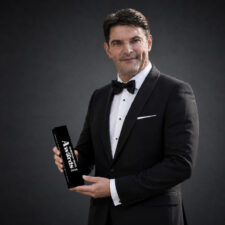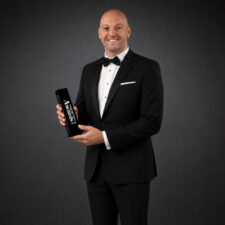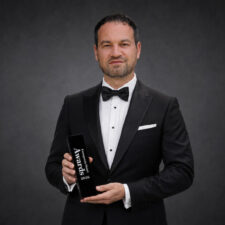
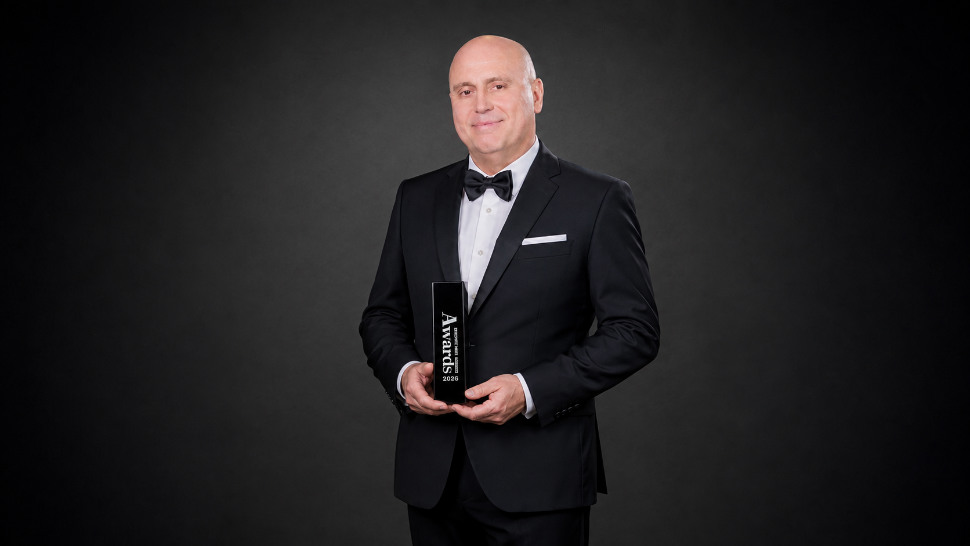
Andrei Dvorjaninov — The Schloss Fall © European Hotel Awards 2026
Historic hotels become meaningful when preservation does more than protect walls. At Keila-Joa, around thirty kilometres from Tallinn, The Schloss Fall has been restored as a place where architecture, landscape, accommodation and cultural life remain in active use. That approach has earned the Estonian property the title Historic Castle of the Year 2026 at the European Hotel Awards.
The Schloss Fall received the Historic Castle of the Year 2026 distinction at the European Hotel Awards. Represented by co-owners Andrei Dvorjaninov and Margus Kuklane, the estate offers a particularly clear example of heritage hospitality: the ambition has been not only to save a historic castle, but to give it a contemporary purpose without stripping away the character that made the place worth saving.
A nineteenth-century castle brought back into use
The present castle dates from 1833, when Keila-Joa developed as an important social and cultural estate in northern Estonia. Its later history included long periods of decline, leaving a complex restoration challenge for the owners who began an ambitious revival from 2010.
Restoration in a property of this kind requires more than repairing an exterior. Historic rooms, interiors and furnishings need to make sense together, while landscape, gardens and circulation must once again support real use. At Schloss Fall, the project also included the wider estate, with the park and a rose garden contributing to the renewed experience of the property.
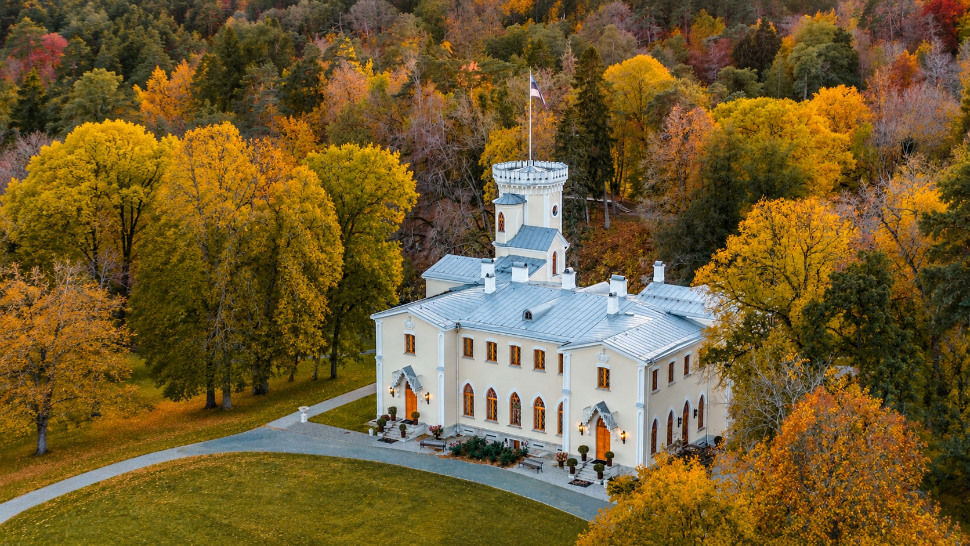
The Schloss Fall has been restored as a living heritage estate rather than a static monument © The Schloss Fall
Preservation without turning the castle into a museum
Since 2013, the property has accommodated stays, events and cultural experiences. It also includes a museum and hosts a variety of functions, allowing several layers of public and private life to coexist within the same historic setting.
This is a significant distinction in heritage hospitality. A castle can be beautifully restored yet still feel untouchable. Schloss Fall takes the opposite approach: history remains visible, but the building is meant to be entered, inhabited and experienced. The architecture retains its authority without preventing the estate from serving present-day guests.
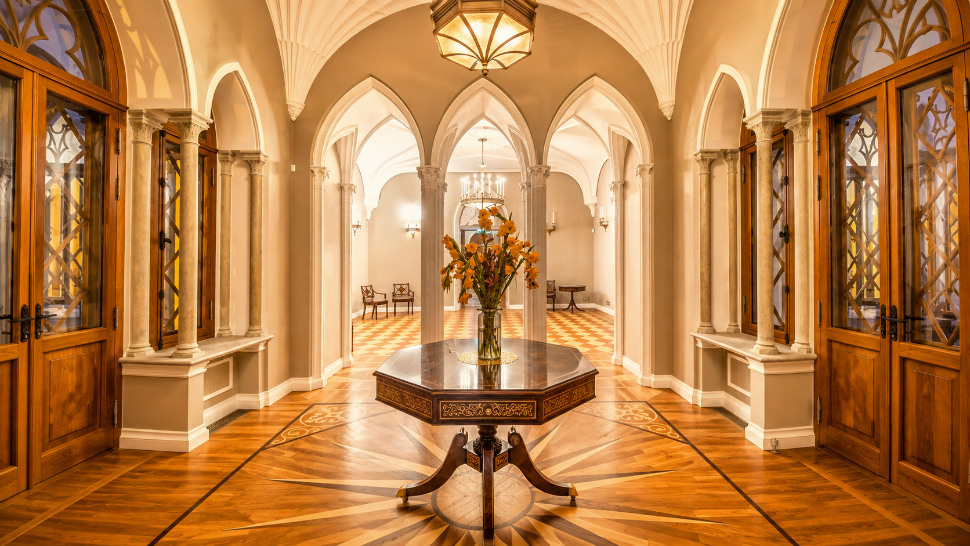
Restored interiors allow the history of Schloss Fall to remain visible within a contemporary hospitality setting © The Schloss Fall
Small-scale accommodation inside a larger cultural estate
The hospitality offer is deliberately intimate, with five suites in the main castle and fourteen Deluxe rooms in the Manor House. The estate also includes event facilities, a seminar room, a private chapel and private dining possibilities. This scale places Schloss Fall somewhere between boutique hotel, historic residence and cultural destination.
For guests, the small number of rooms changes the relationship with the building. The stay is not organised around the anonymity of a large hotel infrastructure. Instead, historic rooms, furniture, views over the park and the nearby Keila-Joa waterfall become part of the experience itself. Heritage is not an added theme; it is the framework within which hospitality takes place.
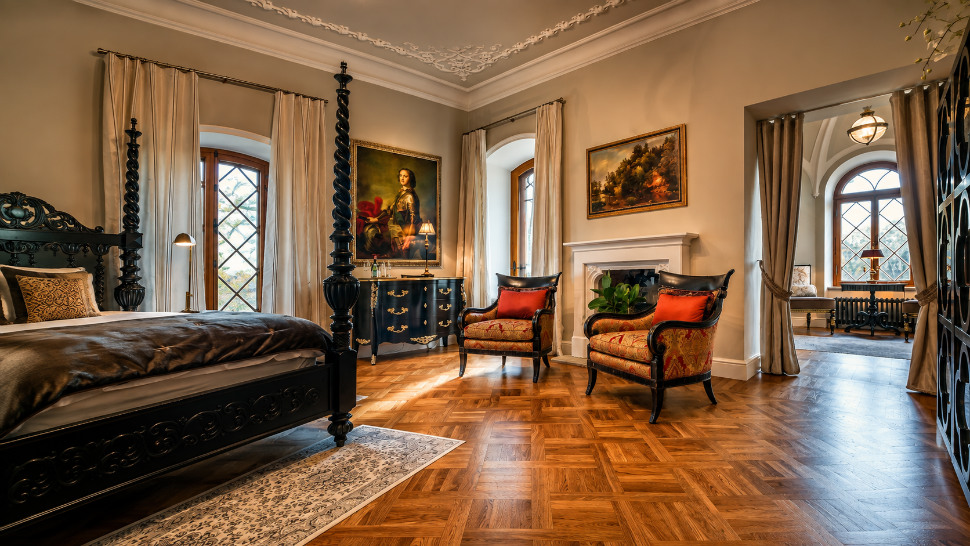
An intentionally limited accommodation offer preserves the residential character of the estate © The Schloss Fall
Landscape as part of the historical experience
The setting at Keila-Joa gives the castle another level of identity. Parkland and the waterfall place the architecture inside a landscape with its own strong presence. In heritage properties, this relationship matters because a building is rarely understood fully in isolation from its grounds.
The revived estate therefore offers more than a sequence of restored rooms. The experience moves between architecture, gardens, nature, culture and hospitality, allowing guests to understand the property as a whole rather than as a collection of preserved interiors.
Why The Schloss Fall received Historic Castle of the Year 2026
The European Hotel Awards Board selected The Schloss Fall because the project demonstrates a coherent balance between major heritage restoration, respect for historic architecture, preservation of an exceptional landscape, intentionally intimate accommodation, and the decision to maintain cultural and social functions within the castle.
The Award therefore recognises more than age or visual beauty. A historic property only becomes relevant to contemporary hospitality when its past can still be felt while the building remains usable, welcoming and alive. Schloss Fall has not attempted to reproduce the nineteenth century as a theatrical set; it has allowed the estate’s historical identity to frame a modern experience.
Under Andrei Dvorjaninov and Margus Kuklane, the restoration has given the castle a future precisely because it respects what came before. That continuity is the core reason for the distinction: the property shows that conservation and hospitality can reinforce one another rather than compete.
Heritage as an active European experience
Across Europe, historic hotels increasingly face the same question: how can important buildings remain economically and culturally alive without losing their integrity? The Schloss Fall provides a compelling Estonian answer. By combining restoration, small-scale stays, cultural activity and landscape, it turns heritage into something guests can experience rather than simply observe.
The Schloss Fall, Historic Castle of the Year 2026
Keila-Joa Schloss Fall
Pargi allee 5, Keila-Joa alevik
Lääne-Harju vald, Harju maakond 76701, Estonia
Tel. +372 56288287
Internet: schlossfall.com
https://youtu.be/SGxHA–nz4w
European Hotel Awards 2026 Partners















Tags: Andrei Dvorjaninov, castle hotel, Estonia, European hospitality, European Hotel Awards 2026, heritage hospitality, Historic Castle of the Year 2026, historic hotel, Keila-Joa, Margus Kuklane, Schloss Fall, The Schloss Fall